Corporate Investments as an Alternative to Holding Cash
Nicholas Clark, 26 May 2026

Nicholas Clark, 26 May 2026
Many businesses continue to hold substantial levels of surplus corporate cash following periods of strong trading, cautious financial planning or delayed expansion projects. In many cases, companies also retain higher cash balances because extracting profits is not always tax-efficient or practical, making it more attractive to keep funds within the business.
While holding cash in business bank accounts can provide security and liquidity, companies with longer-term reserves may wish to consider whether corporate investment strategies could provide greater growth potential over time.
For businesses exploring alternatives to holding business cash in bank accounts, investing surplus company reserves may form part of a broader long-term financial planning strategy.
Although investing business cash is not suitable for every company, a structured and diversified approach may help businesses generate stronger long-term returns while supporting future growth ambitions.
Inflation can gradually reduce the purchasing power of cash reserves over time, particularly when deposit interest rates fail to keep pace with rising costs.
As a result, many businesses are reviewing what to do with excess cash reserves and whether investing company reserves in a diversified portfolio of liquid investments could provide stronger long-term opportunities.
Investing surplus corporate cash may offer:
However, all investments carry risk and values can rise or fall over time.
Different asset classes naturally involve varying levels of investment risk and potential return.
A well-structured corporate cash investment strategy will typically consider the business’s objectives, liquidity requirements and risk tolerance.
Examples may include:
These investments may provide greater stability but often lower long-term growth potential.
Examples may include:
These solutions may offer a balance between growth and stability.
Examples may include:
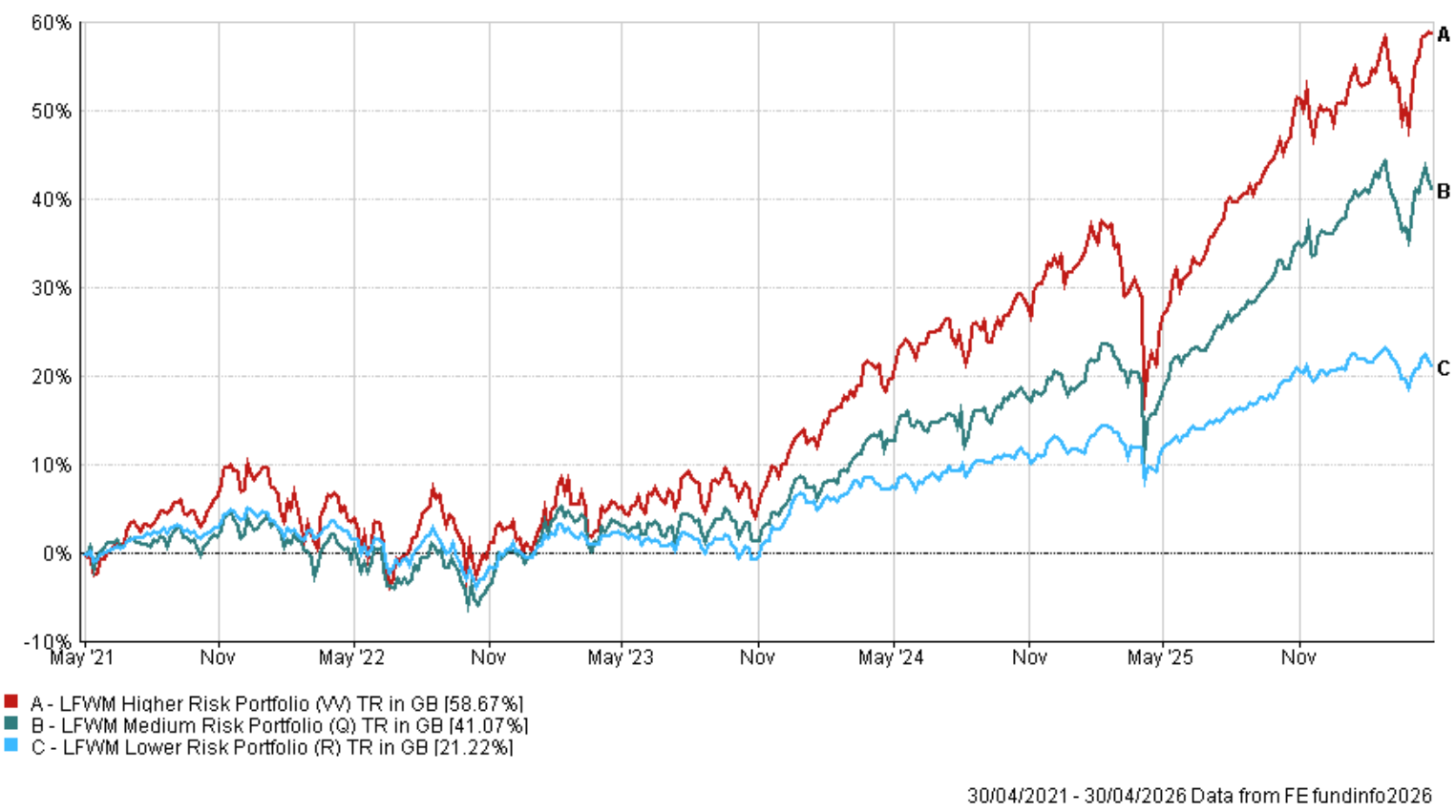
This performance is provided by an independent third party, FE Analytics, and is shown net of the investment strategy charges but does not include platform and adviser charges. Past performance is not an indicator of future performance.
Diversification involves spreading investments across different asset classes, sectors and geographical regions.
For businesses considering investment opportunities for surplus cash, diversification can help reduce concentration risk and improve long-term resilience.
A professionally managed diversified investment portfolio may provide businesses with broader exposure to investment opportunities while helping align corporate cash investment strategies with overall business objectives.
Diversified investment portfolios are commonly used within corporate wealth management strategies to balance growth potential with risk management.
Businesses should carefully consider the tax implications associated with investing surplus company cash.
Potential considerations may include:
Corporate tax planning is an important part of any business investment strategy, and professional financial advice should always be obtained before implementing investment solutions. There may be implications for eligibility for Business Asset Disposal Relief (BADR) or Business Relief (BR).
For some business owners and directors, tax-efficient profit extraction opportunities may also be worth exploring when deciding what to do with excess cash reserves.
Employer pension contributions may potentially:
Pension contributions for directors can often form part of wider corporate financial planning strategies.
VCT investments support smaller UK businesses and may provide attractive tax incentives, including:
EIS investments may provide:
VCT and EIS investments carry significantly higher risks and may not be suitable for all investors.
Don’t invest unless you’re prepared to lose all the money you invest. This is a high-risk investment and you are unlikely to be protected if something goes wrong.
The right strategy will depend on your business objectives, time horizon, liquidity requirements and overall appetite for investment risk.
Some businesses may prioritise capital security and accessibility, while others may choose to allocate a portion of surplus corporate cash towards longer-term investment opportunities.
A carefully structured corporate investment strategy can help businesses balance operational requirements with future growth ambitions.
For businesses considering alternatives to holding business cash in bank accounts, professional advice can help ensure investment decisions align with wider corporate financial goals.
Our expert team can help you create a long-term strategy for surplus corporate cash so get in touch to our team members on the right.
The value of investments can fall as well as rise and you may get back less than originally invested. Past performance is not a reliable indicator of future results. Tax treatment depends on individual circumstances and may change in future.